Test video for storiteca
I'm Jane Houston Jones from NASA's Jet Propulsion Laboratory in Pasadena, California, and this is what November's sky has for you. It's a binocular month: the Moon, a few star clusters, a close pairing of Venus and Jupiter, and a comet that's still bright enough to chase.
What you'll get here:
- Where and when to catch the Venus–Jupiter pairing before dawn, and how to do it safely
- Three meteor showers, their peaks, and the honest rates to expect
- The three mornings when the Moon glides past a star cluster
- Saturn and Mercury at dusk, and a greenish comet for binoculars
Venus meets Jupiter before dawn
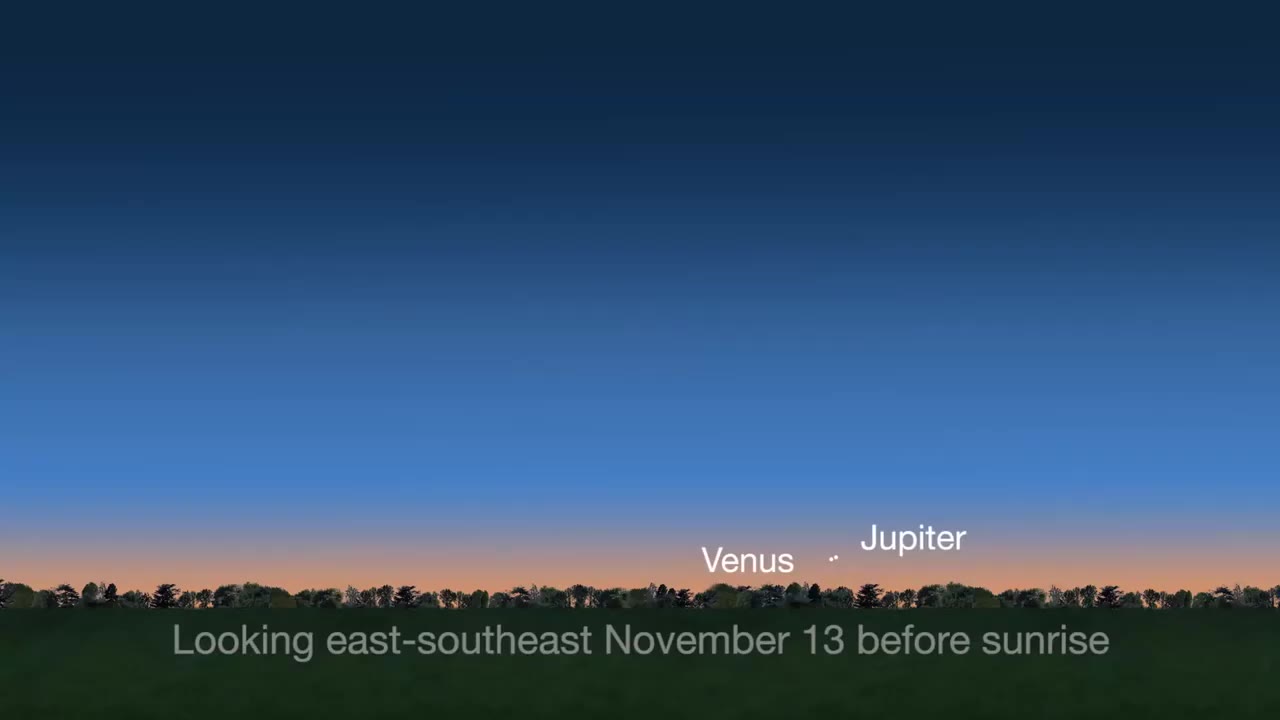
You can't miss bright Venus in the pre-dawn sky. This month Venus pairs up with Jupiter on the morning of November 13th, as they did in 2015 and 2016 — though in those years the two planets appeared a little closer together than they will this year.
You'll have to be looking very low on the east-southeast horizon, about 45 minutes before sunrise. Protect your eyes: don't aim your binoculars directly at the Sun, and don't look at the approaching sunrise with unaided eyes or telescopes either.
Three meteor showers, none of them rich
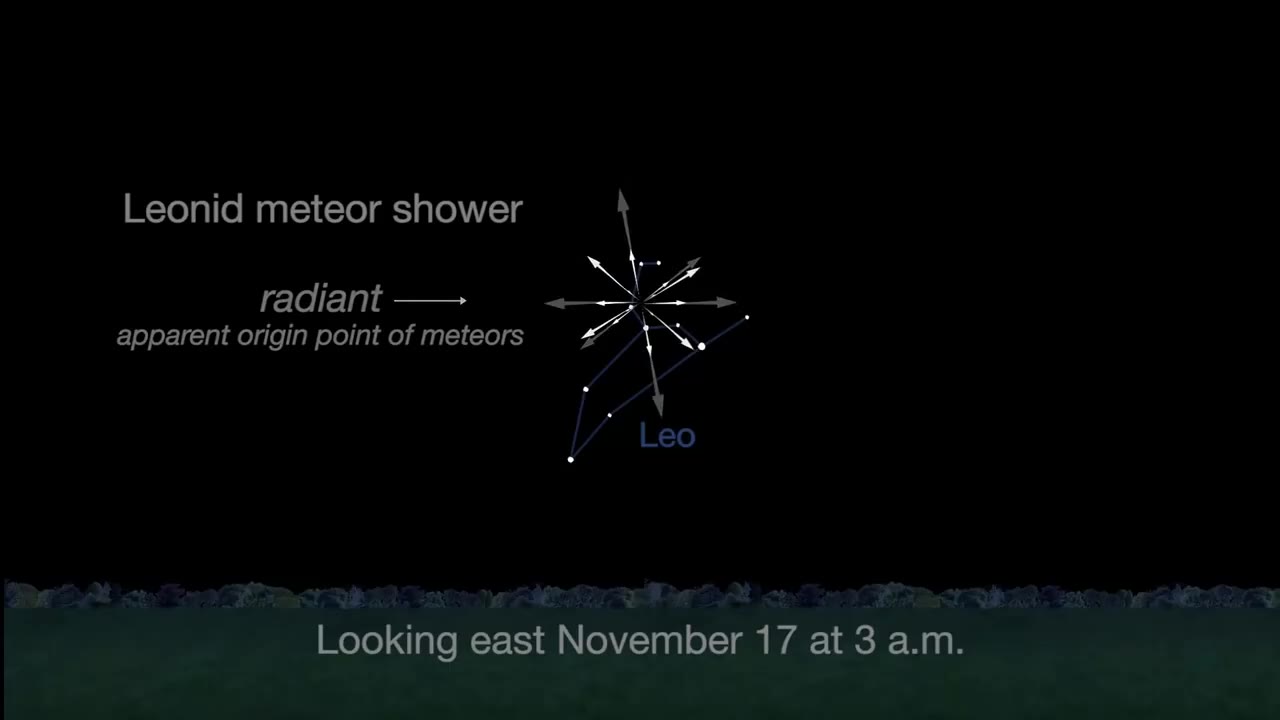
There are three meteor showers this month, but none of them will present high numbers of meteors at their peak.
| Shower | Peak | Expected rate | Character |
|---|---|---|---|
| Leonids | November 17, moonless | no more than 10 per hour around 3 a.m. | — |
| Taurids (northern and southern branches) | — | about 5 per hour | slow, bright meteors are common |
| November Orionids | the 28th | no more than 3 per hour | swift |
The Leonids peak on a moonless November 17th, with the height of the shower around 3:00 a.m. The northern and southern sub-branches of the Taurid meteor shower offer sparse counts, but those slow, bright meteors make up for it. The nearby November Orionids are the opposite of the Taurids — swift, but thin.
The Moon tours three star clusters
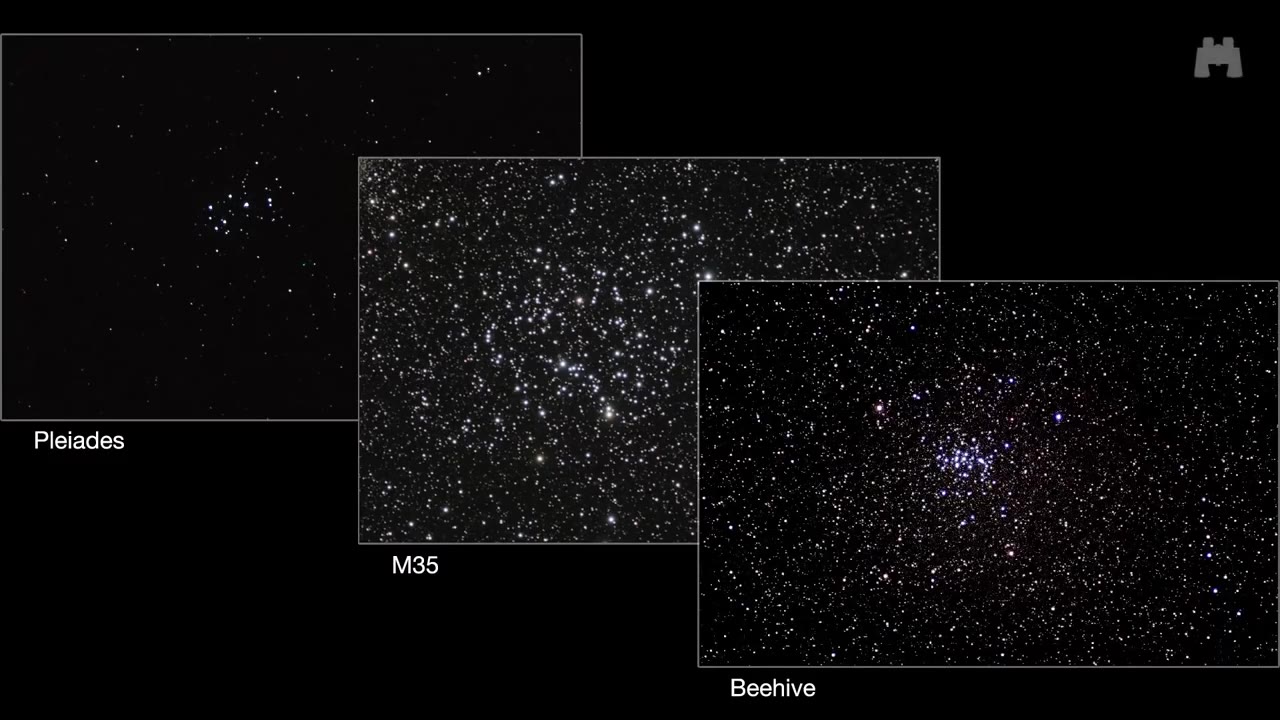
The Moon glides by three beautiful star clusters in the morning sky this month, and a pair of binoculars will let you resolve the individual stars in each one.
- The Pleiades and the Moon on the 5th
- The Messier 35 (M35) cluster and the Moon on the 7th
- The Beehive cluster and the Moon on the 10th
Saturn and Mercury at dusk
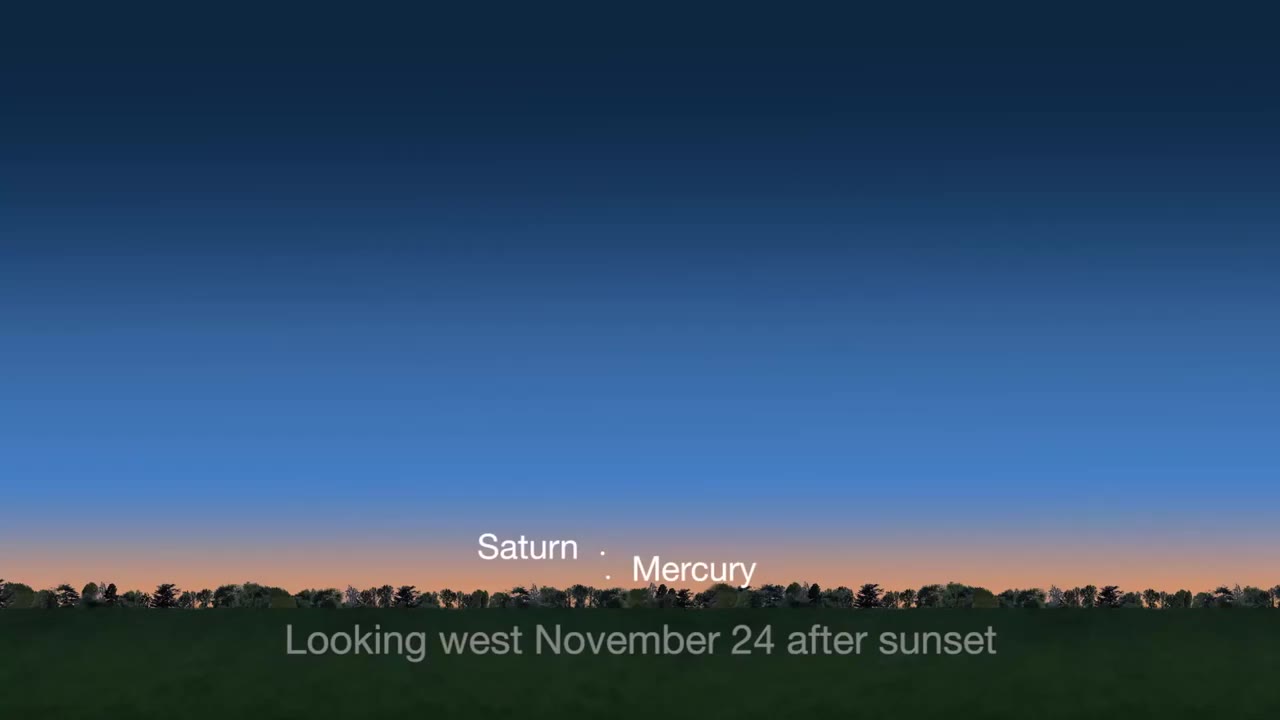
Meanwhile, at dusk, catch Saturn as it dips closer to the western horizon. It pairs up with Mercury on the 24th through the 28th.
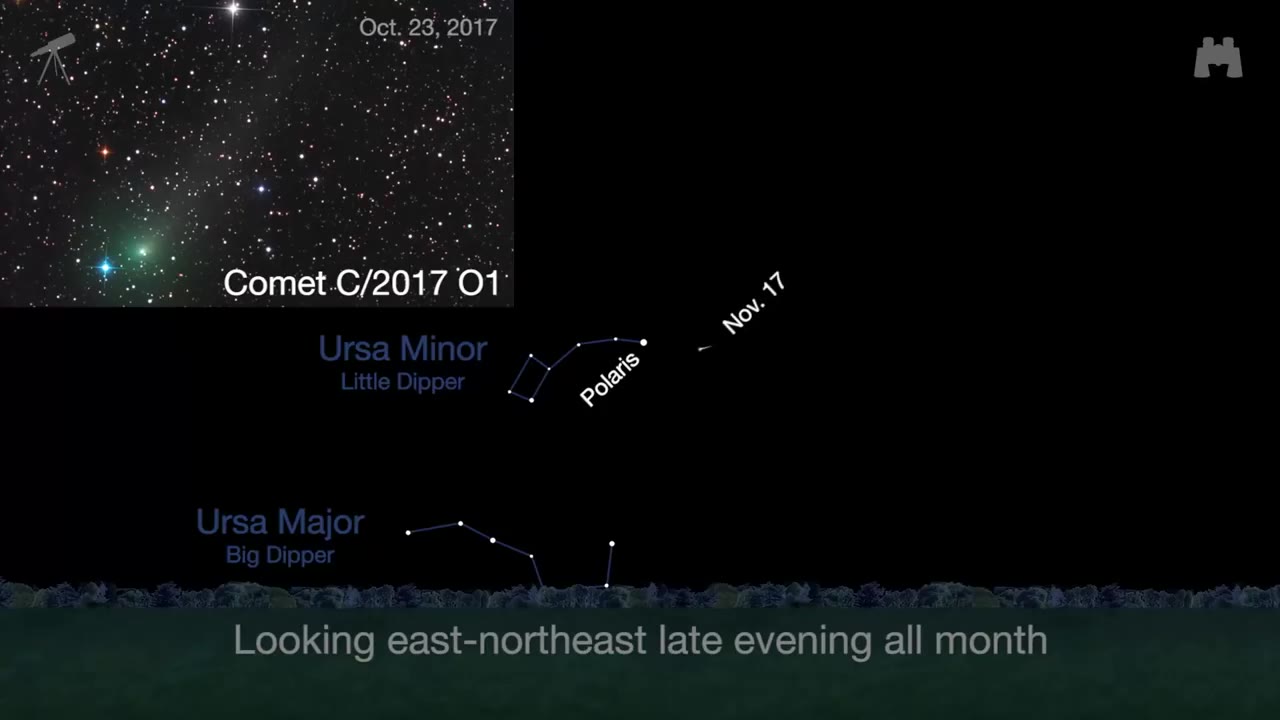
A binocular comet: C/2017 O1
Comet C/2017 O1, discovered only in July by the All-Sky Automated Survey for Supernovae, came close to the Sun in October and should still be a binocular-friendly magnitude 7 or 8 greenish object in November.
Use Polaris, the North Star, as a guide, and look in the east to north-east sky in the late evening.
You can find out about all of NASA's missions at www.nasa.gov. That's all for this month.
Read next
-
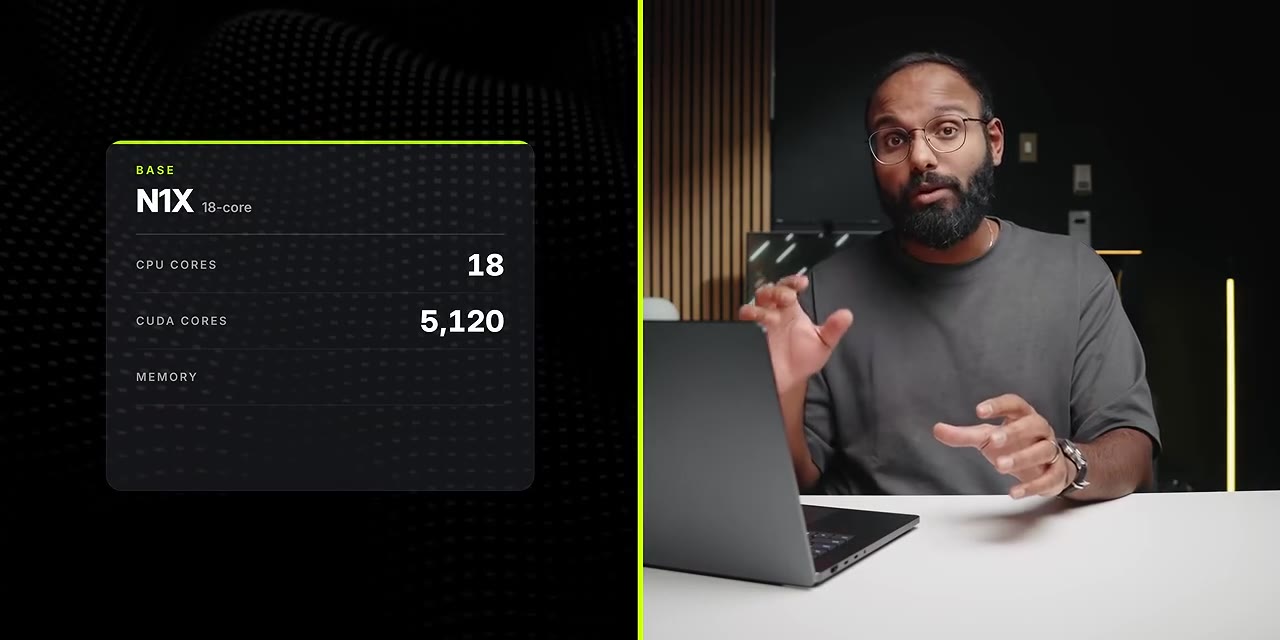 RTX Spark vs the Fastest MacBook Pro (M5 Pro / M5 Max)
NVIDIA's RTX Spark finally landed in my hands inside Microsoft's Surface Laptop Ultra, and I spent the last stretch benchmarking it against Apple's fastest MacBook Pro with M5 Max, plus M5 Pro, base M5, AMD's Strix Halo and a proper gaming… Hardware Canucks
-
 Александр Овечкин забросил первую шайбу в сезоне и снова превзошел Уэйна Гретцки / Момент дня
12 октября «Вашингтон» принимал «Сиэтл» — и проиграл 3:5, но запомнится этот матч не счётом. Александр Овечкин наконец-то забросил первую шайбу в новом регулярном чемпионате НХЛ, а заодно снова обошёл Уэйна Гретцки в ещё одном рейтинге… Хоккей Sport24
-
 Купили автодом в Нидерландах! Большое приключение
Мы проснулись в Гамбурге в 4:20 утра, пересели на четыре поезда подряд, взяли в Нидерландах машину в аренду и поехали через всю страну смотреть автодома. Внизу — вся поездка как она была: дорога, прокат, конкретные машины с ценами и… BorisGetsCash