 Sub Club by RevenueCat
How Praktika built a profitable $50M ARR AI business — Adam Turaev, Praktika
Adam Turaev co-founded Praktika, an AI language-learning app built around generative avatars, and we wanted to know how a team selling $100 annual subscriptions into Brazil got to a profitable $50M ARR business with a little more than 40 people. He walked us through the pre-LLM years at his first company, the decision to sell career outcomes instead of English lessons, and the micro-influencer program that produced one 30-million-view video and took the company from $1M to $12M ARR in a single month. Along the way: why unhinged avatars worked in the feed and failed inside the app, why organic and paid never touch each other, and why the biggest win of his year was moving from Flutter to iOS native.
What you'll learn
- Why Adam and his co-founders pivoted from enterprise chatbots to consumer language learning years before the models were good enough
- How they picked Brazil using English-penetration data, and why the pitch was "a better job", never "better English"
- The reason Praktika's avatars exist at all, and why they're Pixar-styled rather than photoreal
- The creator-sourcing filter — low followers, high reach — the video Adam didn't like, and how the program is staffed and run today
- Where Adam draws the line between unlimited freedom in growth and a one-page rulebook in the product — plus his view on inference costs, profitability at scale, and the Flutter-to-native switch
From enterprise chatbots to a language app
Adam started building with his schoolmates Anton and Ilya, and their first company, Cleverbots, launched in 2017 — the same year the Transformer paper came out, as Jacob pointed out. Back then LLMs were called NLP, and the inspiration was mundane: Telegram opening up its bot API.
"That's how people are going to interact with machines," was the long-term bet. In the meantime, Cleverbots automated customer support and HR support for large international companies, sometimes resolving up to 60% of tickets — in the pre-LLM era.
The pivot wasn't a market-size calculation. "It was really our understanding that there is a pain point," Adam says — a dissatisfaction with existing solutions and the fact that nobody was addressing it. All three founders had lived the language barrier themselves. "I'm obviously not a native English speaker, and English is definitely an income multiplier, opportunities multiplier."
Building with conviction before the models arrived
Publicly, Praktika launched in 2024. Internally, the work started in 2021. The first prototypes were bad. By 2022 there were web versions running on a Synthesia avatar, and because NLP wasn't advanced enough, copywriters and content creators hand-built hundreds of conversation trees covering where a dialogue might go.
The app first hit the App Store in mid-2023 — "and it was a terrible version," Adam says.
What's striking is that even in that hand-wired setup, they kept the avatar. The point was to simulate a human on the other side of the conversation from day one.
Jacob asked whether they genuinely believed the models would scale. "100%. It's easy to say now, but 100% conviction." And it wasn't a popular bet at the time: "Everybody's going crazy about Web3 back then," Adam says, while his team was pitching chatbot automation whose promised capabilities only exist now.
The second payoff was craft. Hundreds of pre-LLM chatbots taught them conversational UX — how people expect a bot to respond, and the exact moments they churn. "It allowed us to be pretty opinionated about what we're building."
David's framing: if you have conviction the technology will catch up, you build what you can today against the vision of what's coming. He put himself on the record as having been wrong about Midjourney — he'd tweeted it would be a decade before AI images got good, like self-driving. It took two years.
Why Brazil, and why the pitch was never "learn English"
Market choice was data-driven. They looked at the English First report on English-language penetration and saw Brazil among the lowest-penetrated markets — a huge country where English carries an enormous income multiplier and global mobility matters, and where people are actively trying to learn.
The obvious objection was purchasing power. Brazilians typically don't pay for consumer subscriptions. Jacob's read: that's exactly the kind of thing that makes another team skip a market, and if the fundamentals are there it might still be the right call.
They launched worldwide, English-only, but concentrated distribution on Brazil.
The positioning followed directly from the purchasing-power problem. If you're asking someone to pay $100 for a yearly subscription against the alternative of a human tutor, you have to explain why it makes sense. Hence the "50x cheaper than a tutor" claim that everyone now uses — it originated in Praktika's Brazil go-to-market.
"We didn't sell English to them. We sold them an opportunity to get a better job."
Every claim was built around that outcome, not around language improvement.
Jacob's generalisation of the principle: there are really only a few consumer problems worth solving — help people get rich, help them spend money they have on something they enjoy, help them stay healthy. The ones where the line to more money is direct are the easier sell. Adam's version is simpler: "Sell what they need ultimately. As you're building, you always keep forgetting about that."
David pushed the lesson out to everyone listening: when your job to be done is getting someone a better job, you make very different product choices than if you're building for people learning for fun — and learning-for-fun will constantly try to pull your attention and your roadmap sideways.
Does real-time translation kill language learning?
Jacob raised the obvious existential question: voice models can now translate in real time, so does anyone still need to learn?
"I don't hear this from users themselves," Adam says. "I hear this a lot from investors."
His counter-example came from a customer interview: an American user who'd moved to Italy used his Praktika avatar to translate for waiters. He had Google Translate available. He wanted his coach instead — not just to improve him, but to be his guide in real life.
The underlying argument is that language isn't transactional. "If you need only transactional purposes, then you can resolve it right now. We don't have to wait for any technologies." But belonging, integrating into a new culture and society — that requires speaking the language. Both of them noted the same phenomenon: you're a slightly different person in each language you speak.
Jacob added the economics of the alternative. Before RevenueCat, when he was learning languages for fun, he used human tutors — roughly $50 for an hour-long session, and you want one every week, and you want a good one who's native and can actually teach.
Coach, not companion
Adam is precise about the difference between Praktika and a general model. With ChatGPT voice you can role-play situations and get a sparring partner. "But when it comes to Praktika, we're not offering just an AI companion, it's an AI coach, AI tutor."
Jacob, who went through the onboarding the morning of the recording, noticed Praktika scores you on CEFR levels — something he'd never seen in a casual language product, only with real tutors.
The experience is designed as a judgment-free, safe environment for breaking the language barrier. And for Praktika's core users, Adam argues, the stakes are different from a hobbyist's:
"You can live without learning this Spanish, and if you skip this one-week lesson, you're fine. But for those guys, this is probably the only opportunity they actually get to learn this language and to get this opportunity in life."
For AI products generally, he thinks owning the outcome is the moat. Once you're accountable for the outcome, context, harness and opinionated user experiences all become priorities — "simple product taste," as he puts it.
Tutors, schools and scaling a teacher
Jacob asked where the education system fits. Adam would love to be part of it but thinks regulation leaves schools lagging badly behind.
He doesn't think AI replaces tutors, though. Their methodologies and knowledge are the scarce input, and the opportunity is partnership — scaling that knowledge rather than substituting for it. A tutor who physically cannot serve more than 20 students could serve 1,000, one-to-one, face-to-face.
"We're getting to the point where you can clone your voice, face, build your own avatar, feed it with your context, your special sauce to pedagogy, and it will serve your students in your own way. None of best models out there can do this, because you have your own special DNA to what you're doing."
Why the avatars exist
The avatars were not a marketing decision. "It might be controversial, but it was never with marketing or distribution in mind."
The insight came out of onboarding data. Among the reasons users gave for being there, one of the most-clicked buttons was fear — fear is why I want an avatar to teach me, why I want to rehearse.
The language barrier, Adam argues, is only partly a skill issue. A big part is psychological: talking to another human in a foreign language, having to think fast, under stress. So the avatar doesn't need to simulate a human to 100%. It needs to produce the feeling that somebody is watching you.
"I rehearse this feeling. So that's why when people work with Praktika and then they have to speak this language in other cases, but with real human, it's much easier for them."
When they raised their first round, this was one of the most questioned parts of the product. Now, Adam says, it's obvious why it's there.
The Pixar styling is pragmatic, not ideological. Push toward photorealism and you fall into the uncanny valley — Jacob says only this year has he seen live avatars that aren't cringey, and Adam still thinks they're a bit creepy. "We're not religiously into those Pixar-style avatars, but as of now, this is the best way to give this experience to users without creeping them out." He notes Muse, Dots and others have also stayed away from human avatars.
The micro-influencer filter: low followers, high reach
Growth through micro-influencers didn't start as a strategy. It started as a budget constraint. "I don't have budgets for large influencers in the region. I need someone like a rising star."
Adam's method on Modash, then in its early days:
- Cap the follower count — he set it to under 5,000 followers, since following was the main thing creators priced on.
- Within that pool, filter for creators getting a lot of views right now, meaning the algorithm is already prioritising them.
That filter surfaced a creator hitting tens of millions of views on educational videos with almost no following. He had no collaboration email listed and, Adam says, didn't fully realise what he had.
"I just reached out to him right in TikTok and just told him, 'Hey, we're building this app and it seems like we have a good match, so do you want to work together?'"
That creator is Gustavo. He's an employee now, still making videos, still running Praktika's social media, and became something of the face of the company.
Jacob's framing was that this catches people on the way up: the views are being driven by the content, not by an existing follower base, which is the more valuable signal anyway. You're looking for an underpriced asset.
Adam corrected the emphasis slightly. "It's not even about underpriced. It's more that you're approaching someone on their peak even before they're peaking."
And he thinks it still works. There are plenty of creators like this, and the filter generalises — it isn't really about targeting micro-influencers, it's about isolating anyone whose views are wildly out of proportion to their following.
The outreach itself was brute force. "Back then you didn't have all these automations you have these days," Adam says. As founder he spent roughly a month on it full-time, working a long list, sending emails and DMs one at a time. A few of them worked out.
One of them sent back a video Adam didn't like. "Eh, I don't like this video, but do whatever, you can post it." It did 10 million views on Instagram, another 10 million on TikTok, another 10 million on YouTube.
The 30-million-view video that took ARR from $1M to $12M
The format Gustavo invented is now, Adam says, the main structure of video for language-learning apps generally: a short conversation in which a coach corrects the learner's mistakes. Because he's Brazilian, he knew the pain point deeply — and he knew that showing the app wasn't the hook.
Adam had pushed back on exactly that: "Hey, why don't you speak about the app? Probably you want to showcase the app itself." Gustavo's answer was "Believe me, trust me."
Jacob recognised the format instantly and tried to explain why it works. When humans see somebody doing something wrong, there's an impulse to correct it — the same reflex as the meme video of someone pushing shapes into the wrong holes while you scream at the screen. And the targeting is subtle: it isn't aimed at absolute beginners, it's aimed at people who've taken a few lessons and get to think no, that's wrong, and I'm smart.
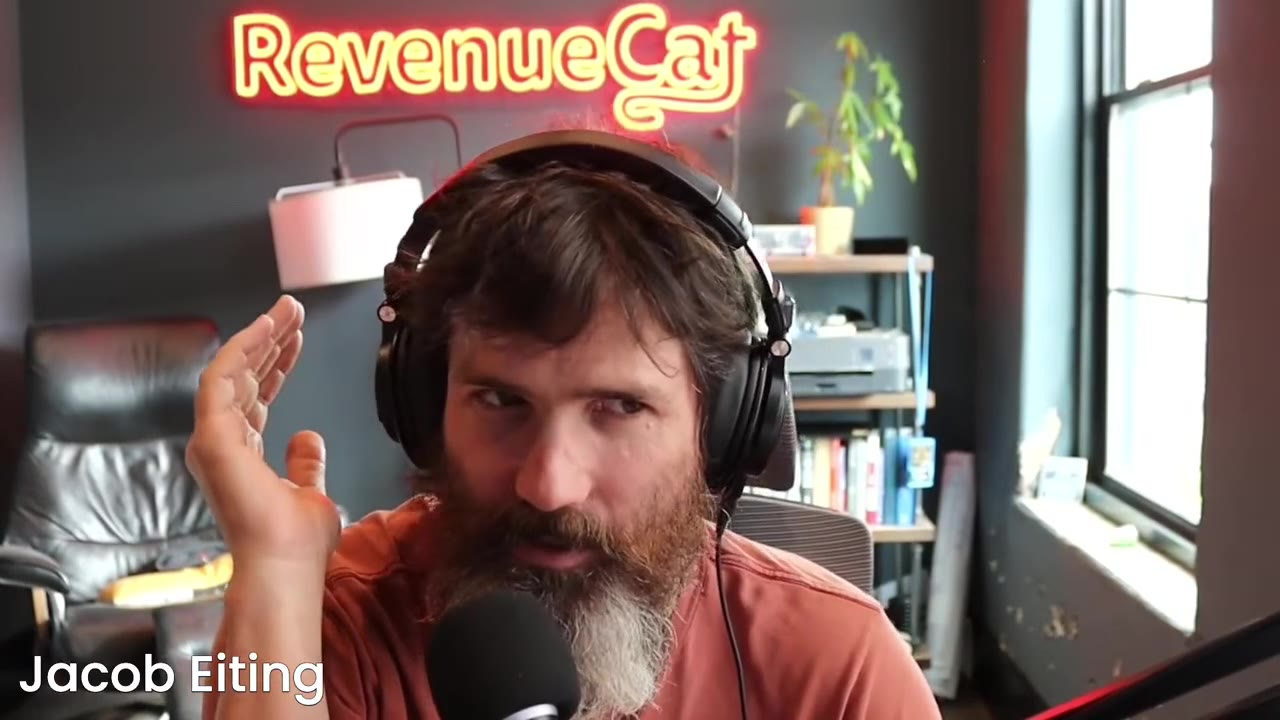
We asked the obvious follow-up: one video, even at 30 million views, doesn't move a company from $1M to $12M ARR in a month. Adam's answer was that they didn't really understand what was happening at the time. "Hey, seems like it was working. Let's just scale it as fast as we can." They replicated the video with other creators, in other countries, with different source and target language pairs and different avatars — the format turned out to be globally scalable in a way most country-specific launches aren't.
There was paid money behind it, but only a little. In those first days CPMs, CPIs and cost per trial and purchase were, as Adam puts it, close to zero.
And Gustavo? "I hired him immediately like, 'I need you, guy.'"
Don't tell influencers how to do their job
Jacob's read on the story was that the interesting part is Adam not liking the video. He admitted the same pattern at RevenueCat: plenty of things he would have killed that he's glad survived, and some things he didn't kill that he wishes he had. If everything passes through the founder's approval filter, the blind spots stay blind.
Adam's version has been a rule from the start: do not tell influencers how to do their job. "If you're hiring them because they're getting an amazing reach, let them do their job." As Jacob put it — if you were that influential, you'd just make the videos yourself.
How the creator program is staffed today
The approach hasn't changed, but it now has an organisation behind it. There's an influencer lead and influencer coaches running individual countries — and Adam is opinionated that all of them are ex-creators.
- His influencer lead started out making videos for Praktika from Poland, did an excellent job, and was hired to run the programs worldwide.
- Each coach runs a roster of 20 or 30 influencers and rotates angles across them.
- The reasoning: knowing what good content is, is the skill you can't teach quickly. "You can sort the management stuff out and it's not that complicated, especially now."
Leads and coaches are in-house; the creators themselves stay contractors. Gustavo is a separate stream — an internal influencer, still making videos and running Praktika's social media. The external creator program sits at more than 100 influencers and keeps growing, because the country-by-country opportunity is far from exhausted.
They run it on SideShift, with a few internal add-ons for more comprehensive analytics and reporting against their own goals. Deal structure is deliberately flexible — typically a fixed fee plus a bonus on views, but the coach structure lets them bend it. "If there is a good talent, just do whatever to hire this person."
Keep organic and paid as separate streams
David asked how the viral content feeds the paid ad engine. Adam's answer was that it mostly doesn't — on purpose.
"Those two are separate streams. We don't mix them up."
The reason is angle fatigue. An in-house team eventually runs out of ideas about what Praktika can offer and how to say it; every new creator is a potential new way of thinking. Mixing the programs would compromise the freedom that produces those angles.
The handoff happens only after the fact: when a creator video hits virality, it's shared with the paid team, who reproduce it with their own roster of internal creators and contractors.
Growth can be unhinged. The product can't.
The unhinged avatars went viral in the upper funnel, and the next step looked reasonable: put them in the app. It didn't work.
"It actually caused more people not being happy about this, and not understanding why my avatar is cursing. The image is fine. I want to talk to this avatar, but why is it cursing?" Praktika decided it doesn't want cursing avatars — it comes back to coaches versus companions, and you want your coach to be a bit more serious. When David later asked for the biggest failure of the year, this was it: "They didn't like it at all. Our picture on the market is probably a bit more good guys."
Jacob's parallel was Duolingo — Duo the Owl is far more unhinged on social than inside the app — and RevenueCat's own cat characters, which crept onto every page of the dashboard until "one day I woke up and it looked like a McDonald's inside the product."
Adam's resolution is a clean boundary rather than a single tone of voice:
- Product: very clear boundaries, agreed internally, written down on a single sheet. "It doesn't have to be complicated."
- Growth: basically no limits. Some basic restrictions, but creators are free to come up with pretty much any angle.
The difference between the two, Adam says, is dramatic — and deliberate.
$50M ARR, 40 people, profitable
Praktika is now at $50M ARR with almost half a million paying subscribers, run by a team of a little more than 40 people — more than $1M of revenue per employee.
The current focus is making coaches more proactive — guiding the user through what is a painful process — inspired by what Muse and Dots are doing. Jacob called it harness engineering, and Adam agreed, with a distinction:
"Those are accomplisher AI. They do tasks for you, but what we do, we guide you and we improve you as a human, because the quality of output is really depending on quality of input."
He extends that into a view on AI safety: if you want AI to be safe, care about who's using it and how they've been educated to use it. Praktika starts with language learning and intends to scale into other subjects.
That agentic framing is already eating conventional app mechanics. Setting a daily reminder has no interface — the tutor asks whether you'd like one and sets it for you. Jacob noted the implications for measurement and testing, since every agent behaves a little differently.
Inference costs: optimise for quality and wait
On the zero-marginal-cost question — avatars, live conversation, inference — Adam's position is to prioritise quality and let the market solve the economics.
"I'm pretty sure models will get cheaper and it will allow you to balance your economics." His example: 5.6 Luna landed 50% cheaper and the unit economics improved overnight; two or three weeks later Luna 6 arrived 50% cheaper than the already-50%-cheaper model.
And he's firm that this isn't an argument for burning money. "We're profitable, by the way. You can be at this scale, be profitable and still scale. You can focus on quality and be efficient."
Jacob's addition: you don't need to ride the intelligence curve forever. "I don't need a super intelligent Spanish tutor. I need a pretty intelligent Spanish tutor." Past good enough, the price just falls. Adam's endgame bet is full-stack LLMs running on device; Jacob's is that AI follows databases — forty years of optimisation until the marginal cost is roughly the cost of a kilowatt.
Flutter to iOS native was the biggest win of the year
Adam's answer to our standard closing question was a surprise to us and, he says, to his team.
They moved from cross-platform Flutter to iOS native, and went in hoping only to avoid losing the metrics they'd built over years. Instead it improved across the board — conversion and engagement alike — by stabilising the app and giving users the best experience for their device. Development speed stayed about the same; they were already shipping a lot of experiments.
Jacob's take is that the cross-platform argument has moved fast. For a moment the frameworks looked more valuable because agents were better at them; now agents write native iOS and native Android well enough that the choice is close to an implementation detail, and Flutter made design choices that fit the new world less well than React Native.
Adam's version if he started again: "I would just go with iOS Native first, and then we'll just build Android."
Asked to finish "growth would be easier if…", Adam didn't hesitate: "There are no copycats."
The practical takeaway: separate your streams and your standards. Give creators almost unlimited freedom and hire the ones who prove they understand the format; keep the product inside a one-page set of rules everyone has agreed to; and let organic and paid run independently so that the people generating new angles never have to think like a performance marketer.
Read next
-
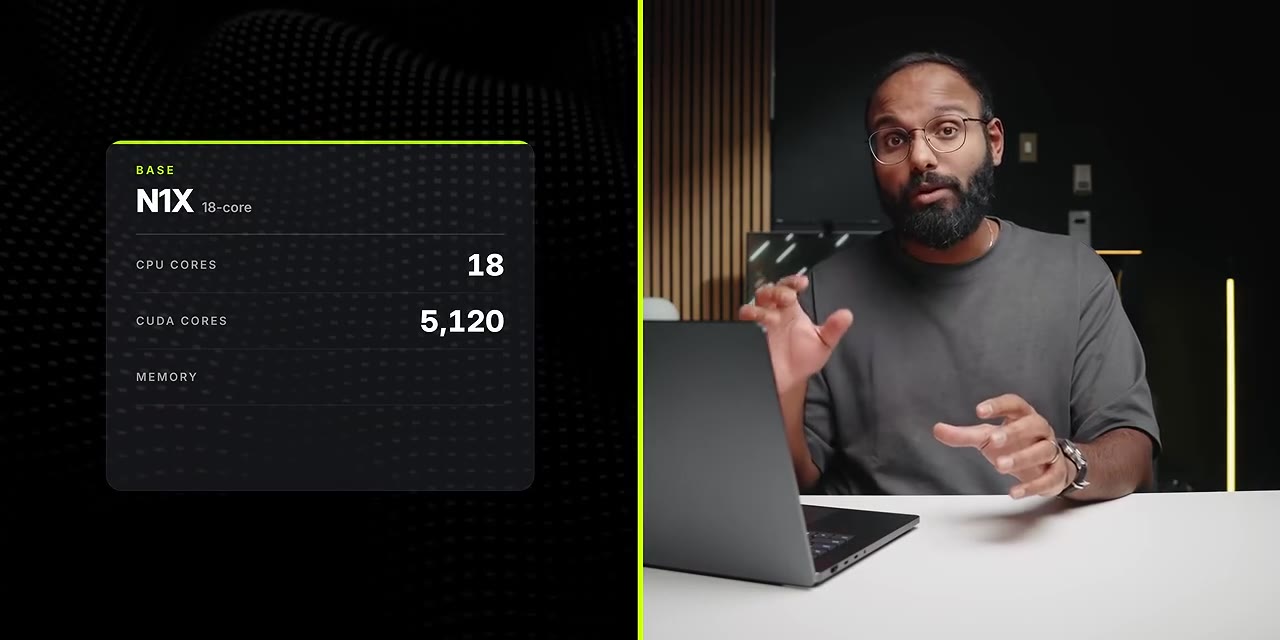 RTX Spark vs the Fastest MacBook Pro (M5 Pro / M5 Max)
NVIDIA's RTX Spark finally landed in my hands inside Microsoft's Surface Laptop Ultra, and I spent the last stretch benchmarking it against Apple's fastest MacBook Pro with M5 Max, plus M5 Pro, base M5, AMD's Strix Halo and a proper gaming… Hardware Canucks
-
 Test video for storiteca
I'm Jane Houston Jones from NASA's Jet Propulsion Laboratory in Pasadena, California, and this is what November's sky has for you. It's a binocular month: the Moon, a few star clusters, a close pairing of Venus and Jupiter, and a comet… Сalihand
- But what is a neural network? | Deep learning chapter 1 This is a 3. It's sloppily written and rendered at an extremely low resolution of 28x28 pixels, but your brain has no trouble recognizing it as a 3. And I want you to take a moment to appreciate how crazy it is that brains can do this so… 3Blue1Brown